
Paris and Berlin Summer 2026 Heat Guide
Summer Heat in Paris and Berlin: Your Practical Guide for Summer 2026
Europe’s two most visited cities are hotter than they have ever been. Paris in the early morning light is genuinely one of the most beautiful places on the planet. Berlin in July feels like a city that collectively decides to live outside. But European summer travel in 2026 has arrived with record temperatures, government heat alerts and city infrastructure that was simply not designed for what is happening outside. Here is everything you need to know before you go.

In This Guide
The Summer 2026 Forecast: What to Expect
Summer 2026 is tracking as another above-average season across northern Europe, a pattern that climate change scientists say is becoming the new normal rather than the exception. France recorded its second-hottest June in history in 2025, and 2026 has continued the trend, with Paris placed under a red heat alert in late June as temperatures pushed past 38 degrees Celsius for several consecutive days. Germany has seen similar conditions, with Berlin recording temperatures close to 40 degrees Celsius and the pattern showing no sign of reversing.
Meteorologists attribute the intensity to a combination of high-pressure heat domes sitting over central Europe and unusually warm Mediterranean Sea temperatures pushing hot air northward earlier in the season. Climate scientists have linked the increased frequency and severity of these events directly to global warming, noting that heatwaves that once occurred once a decade now arrive multiple times each summer. What this means practically for anyone planning a Europe city break this summer is that July and August 2026 in both Paris and Berlin are likely to include multiple heatwave spikes rather than steady warmth. Temperatures of 35 degrees or above during the afternoon are now normal, not exceptional.
Paris: How the City and Its People Are Coping

Paris in summer 2026 sees afternoon temperatures regularly hitting 35 to 40 degrees Celsius, with little to no air conditioning in tourist places, hotels, or restaurants. The city runs over 1,200 public drinking fountains and has mapped over 1,400 officially designated cool spaces, but the heat is real and following basic heatwave safety tips makes a significant difference to your trip.
The Heat and Government Response
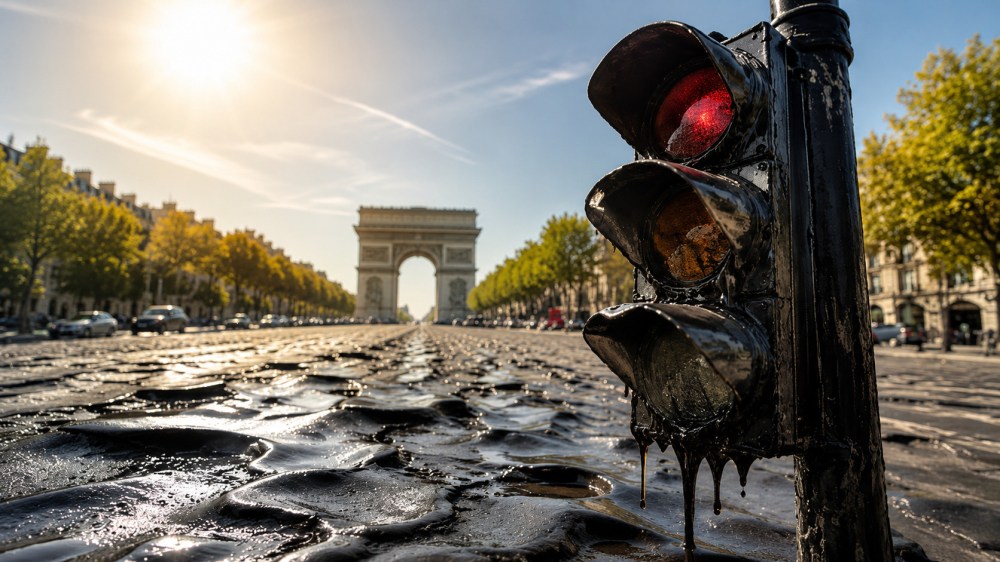
Paris was not built for this kind of heat. Most of the city’s historic buildings, smaller hotels, and neighbourhood restaurants have no air conditioning at all. During the June 2026 heatwave, the French government placed over 16 departments including the entire Île-de-France region under red alert, the highest designation. Major attractions including the Eiffel Tower reduced their afternoon hours, and the Louvre cut its closing time to limit visitor numbers in buildings where heat accumulates toward the end of the day.
The French government has been expanding its national heat response infrastructure significantly in response to climate change. Paris now runs over 1,200 public drinking fountains across the city, installed misting stations at several busy public squares including Place de la République, and opened over 1,400 officially designated cool spaces listed on a public map, where anyone can walk in and rest in air conditioned or naturally cool environments.
How Locals Are Dealing With It
Locals deal with the heat the way Parisians have always dealt with inconvenience, elegantly and on their own terms. Mornings before 10am are when the city moves. By noon, the terraces are quieter and generally the museums fill up. Afternoons between 1pm and 5pm are genuinely brutal in direct sun, and most people stay indoor. Evenings are when Paris comes back to life properly, with dinner starting at 8 or later and the Seine walkways busy until well past 10pm.
Free Water and Cooling Spots in Paris
The 1,200 public fountains are your first resource. The Paris Catacombs stay at a naturally cool 14 degrees year-round and are worth visiting for reasons well beyond the macabre. The Musée d’Orsay, the Louvre, and the Centre Pompidou are all fully air conditioned. Canal Saint-Martin has officially opened as a swimming spot during heatwaves from June 2026 between 3pm and 9pm. Shopping centres including Galeries Lafayette and Forum des Halles offer free air conditioned space with no purchase required.
If you want to explore Paris on foot, do it with The Rude Bastards Paris walking tour which covers the city’s real history with fun and politically incorrect humour.
Berlin: How the City and Its People Are Coping
Berlin in summer 2026 regularly sees temperatures spike to 35 to 40 degrees Celsius during heatwaves, despite average highs of around 25 degrees. Unlike Paris, Berlin has lakes, parks and a growing network of free public cooling infrastructure, but its older building stock holds heat badly and most homes have no air conditioning.
The Heat and Government Response
Berlin is also genuinely struggling with temperatures it was never designed for. The thick-walled Altbau apartments that retain heat beautifully in winter become slow-release ovens by July. The underground network, built when summers in central Europe rarely cleared 28 degrees, can feel suffocating during a heatwave.
The Berlin city government has responded more actively than most European capitals. In 2025 it published its first formal Hitzeaktionsplan, a heat action plan that included funding for new public cooling infrastructure across all districts, expanded the public drinking fountain network to 238 fountains, and launched the Kühle Kirchen scheme, a network of churches that stay open as free cooling shelters during heatwaves with seating, water, and no entry requirement. For summer 2026 specifically, a free temporary public swimming pool is running near the Volksbühne theatre from August through October as part of the city’s heat adaptation pilot programme, a direct response to the intensity of the 2025 season.
How Locals Are Dealing With It
Berliners deal with the heat with a kind of practical creativity that is very much their own. Morning lake visits before 9am, before the S-Bahn crowds build. Beer gardens under mature trees, particularly the Prater in Prenzlauer Berg which has been running since 1837, where there is real shade and a genuinely local atmosphere. Museum Island in Mitte packages five major air conditioned museums into one walkable stretch and is where you will find both tourists and locals on the hottest afternoons. The Stadtbad Neukölln, a 1914 mosaic-tiled swimming hall, is reliably cooler than the outdoor lakes and considerably less crowded when heatwaves hit.
Free Water and Cooling Spots in Berlin
238 public drinking fountains citywide, all clearly mapped by Berliner Wasserbetriebe. Kühle Kirchen network churches across all districts, open with no entry requirement. Museum Island, free or low cost with a museum pass. The free Volksbühne pool from August 2026. The lakes at Schlachtensee, Wannsee, and Müggelsee, best visited before 9am or after 5pm. The Mall of Berlin and Potsdamer Platz Arkaden for free air conditioning in the centre.
For the walking and history side of Berlin, mornings are the window. The Rude Bastards Berlin tour runs from the Prussian era to the fall of the Wall and tells the parts most tours leave out. Go early, before the heat and the crowds arrive together.
How to Structure Your Days
The same framework works in both cities. Mornings before 10am are for being outside, exploring, and doing any walking tours. Midday to mid-afternoon is for museums, long lunches, or finding one of the free cooling spots listed above. Late afternoon you can begin moving again as the worst of the heat passes. Evenings in both cities are genuinely the best time to be outdoors in summer, long and warm with a relaxed pace that disappears entirely by October.
Drink water consistently throughout the day, use the free public fountains in both cities rather than buying bottled water, and wear sunscreen above SPF 30 every day regardless of cloud cover. These are not optional heatwave safety tips when temperatures are pushing 38 degrees, they are the difference between a good day and a bad one.
Book Your Free Walking Tour Before the Heat Hits
Summer 2026 is moving fast and so are the booking calendars. Both Paris and Berlin are seeing record tourist numbers this season, and morning tour slots, the only sensible time to be out walking in this heat, are the first to fill. If you are planning a Europe city break that includes either city, the smartest move is to lock in your morning tour now and build the rest of your day around it. You will see more, enjoy it more and spend the brutal afternoon hours exactly where you should be: somewhere cool with something cold.
Book the Rude Bastards Paris walking tour here – Book the Rude Bastards Berlin tour here
Frequently Asked Questions
How hot does Paris get in summer?
Does Paris have air conditioning?
What is the best time of day to sightsee in Paris during summer?
How hot does Berlin get in summer?
Where can I cool down for free in Berlin during a heatwave?
Is it worth visiting Paris or Berlin during a heatwave?
What should I pack for summer in Paris or Berlin?
Sources
The data and information in this guide are drawn from the following credible sources:
- Météo-France — National Weather Service France — temperature records, red alert designations, and June 2026 heatwave data
- Berlin Senat — Bärenhitze Heatwave Information — Hitzeaktionsplan, Kühle Kirchen scheme, and public cooling infrastructure details
- Paris je t’aime — Official Paris Tourism: Things to Do in the Heat — cool spaces map, Canal Saint-Martin swimming, park and fountain data
- Visit Berlin — 11 Tips for Dealing With the Heatwave — lake, pool, and local cooling advice
- CNN — European Heatwave Coverage — Eiffel Tower closure, red alert context, Mediterranean heat dome
- Wikipedia — 2025 European Heatwaves — historical temperature records and France’s second-hottest June data
- IQAir — Heatwave Map: Europe — Europe-wide temperature and air quality data
- NPR — France Records Its Hottest Day Ever — Louvre hour reductions, June 2026 heatwave specifics