
Is Stuttgart worth visitng
I Came for the Cars. Stuttgart Made Me Stay for Everything Else.
It was the third evening and I was standing on a hillside staircase with a glass of wine I hadn’t planned to buy, watching the sunset. The Kessel, Stuttgart’s natural valley, a cauldron of vineyards and rooftops was doing that thing it does at dusk, pulling all the light inward before letting it go. I hadn’t planned to be here at all. A friend had dismissed Stuttgart as boring, too corporate, just car museums and suits. That was reason enough to go.
Stuttgart sits in a natural valley ringed by forested hills and actual vineyards. That geography does something to the city’s character. It makes it self-contained, not particularly bothered with performing for outsiders. If you arrive expecting Berlin’s edge or Munich’s swagger, Stuttgart will disappoint you immediately. Give it a morning, and something quietly begins to change, the way the best cities often do.
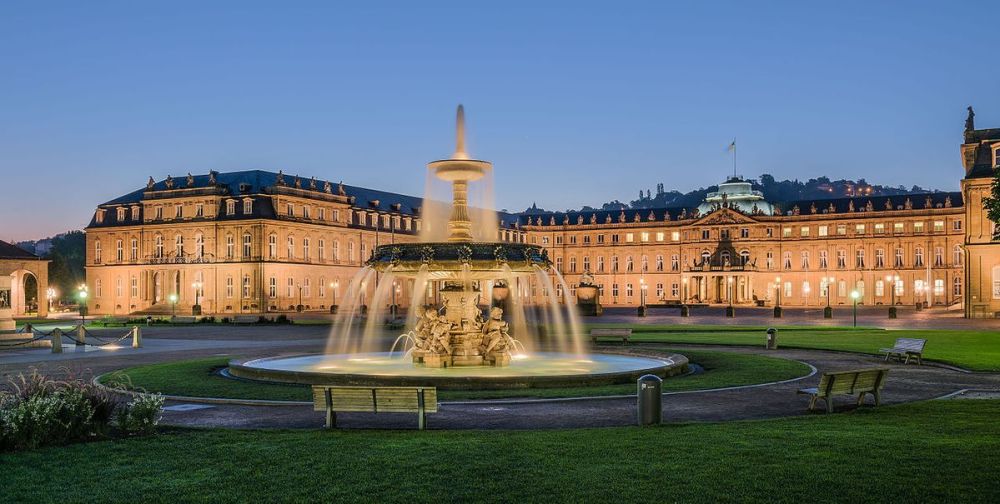
A Morning on Schlossplatz, Before the City Woke Up
My first full day started badly. I misread the tram map, ended up two stops in the wrong direction in the rain, and arrived at Schlossplatz twenty minutes late, damp and annoyed. At 8am though, the square made me forget all of it. The New Palace facade glowed pale gold in the early light, a few joggers cut across the grass, and pigeons owned everything they surveyed. There was a quiet elegance to it I hadn’t anticipated, not the grand theatrics of a European capital square but something very composed
I had a coffee from a nearby bakery, ate a fresh Laugenbrezel still warm from the oven and watched the city gradually fill itself in. Stuttgart doesn’t perform its charm. It just gets on with things, and at some point you realize you’ve been watching, genuinely absorbed.
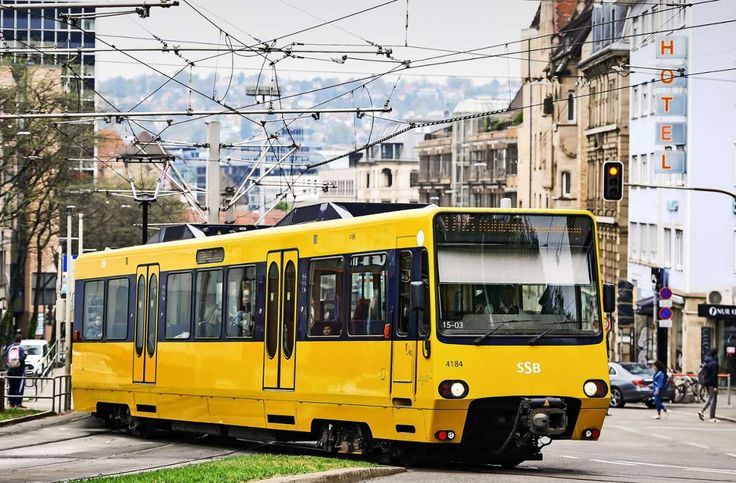
The Tram That Climbs, and the City That Opens
One of the stranger pleasures of Stuttgart is its public transport. The U-Bahn handles the city centre efficiently. The S-Bahn connects the airport and outer suburbs without drama. But what the transit maps don’t prepare you for is the tram climbing out of the valley, the city suddenly expanding below you in layers: vineyards on one slope, a radio tower on another and that low green bowl of the Kessel holding everything together.
I took the tram toward Karlshöhe almost by accident and ended up staying an hour longer than planned. The biergarten there, one of Stuttgart’s best hidden gem viewpoints that you would never find on a tourist map, is the kind of place where you understand why Stuttgart residents have a reputation for not leaving. The view of the city from those hillside tables at golden hour is genuinely one of the best I’ve found in any German city.
If interested about transportation in Berlin Click here
Quiet Places That Earn Their Silence
The Lapidarium, near Marienplatz, is exactly the kind of hidden gem that makes slow travel worthwhile. An open-air sculpture garden tucked into a Renaissance-style terraced park, it holds over two hundred stone artifacts, architectural fragments, statues and busts salvaged from buildings damaged or destroyed in the war. I had the place almost entirely to myself. A wind god and a Ritter stood sentinel at the entrance and deeper in, I found Persephone being carried off by Hades, moss creeping up the plinth, a fountain trickling somewhere behind the hedge. It takes around forty minutes to walk through and costs nothing. In a city famous for world-class car museums, this is the place that stayed with me longest.
I left the Lapidarium quieter than I’d entered it, the kind of quiet that settles in when a place feels home. The afternoon felt soft after that, unhurried. That was the mood I was in when I turned a corner and stumbled onto Feuersee.
A small lake in the Mitte district, ringed by the brick tower of the Johanneskirche reflected perfectly in the still water. In the late light, with a few locals sitting on the steps and the bells marking the hour, it looked like a painting of a place rather than the place itself. It is five minutes from the main shopping street and feels like a different city entirely.
Up Among the Vines

The Grabkapelle Württemberg requires a little effort. You take the S1 S-Bahn to Untertürkheim, then walk up through the vineyard rows to a hilltop that surprises everyone who makes it. The chapel was built by King Wilhelm I as a memorial to his young queen Katharina, a neoclassical temple perched among grapevines with a 360-degree view of the Neckar valley below.
I sat on the hillside until the light failed, a bottle of local Trollinger open beside me, the valley going quiet below. Walking back down through the vines in the near dark, I thought about how nobody I knew had ever mentioned this place. That felt like Stuttgart’s whole story in miniature.
The White-Red Side of the City
You cannot spend time in Stuttgart without feeling the gravitational pull of VfB Stuttgart. On matchday the city doesn’t just support its football club, it becomes it. Red and white appears on balconies, in bakery windows, on the scarves of men who look like they’ve been wearing the same one since the early 1990s. There is a working-class pride to it and the generational loyalty runs in families the way dialects do.
I watched a grandfather explain something to his grandson outside the stadium before kickoff, both in VfB scarves, the older one fraying at the edges, the younger one stiff and new and it told me more about Stuttgart than any guidebook had managed.
The Car Museums Deserve Their Reputation. Just Not All of It.
The Mercedes-Benz Museum and the Porsche Museum are both genuinely excellent and belong in your itinerary without question. But they are not the whole story. Most first-time visitors fly in, spend two days in the museums, and leave without ever finding Feuersee, climbing toward the Grabkapelle, or sitting at a hillside biergarten watching the Kessel go gold. Go to the museums. Then keep going.
Why Stuttgart Gets Under Your Skin

By my last evening, the Maultaschen had been eaten, a soft Swabian pasta parcel traditionally said to hide meat from God on Fridays, and I had walked enough of the Stäffele, Stuttgart’s famous hillside staircases connecting neighborhoods, to understand why locals stay fit without trying. I ended up back on that same staircase from the first evening, the lights of the Kessel coming on one by one in the dusk.
The place keeps its depths out of sight. You have to come looking. Among underrated cities in Germany, Stuttgart sits at the top of a list most travelers don’t know exists.
Practical Tip: The Stuttgart Free Walking Tour
If you want to go deeper than the surface, the Stuttgart Free Walking Tour run by Can You Handle It? Tours is the best thing you can add to your first day. The route covers the House of History and its connection to Claus Graf Stauffenberg, the Old Palace courtyard, the Bunker Hotel converted from a genuine WWII bunker, and Stuttgart’s wine culture woven throughout. It is the kind of Stuttgart walking tour that earns its time, the sort of thing you will find yourself referencing in conversation months later. For anyone serious about understanding this city rather than just passing through it, that is exactly where to begin. Also available in German and Spanish

Miss this unique tour Rude Bastards Tour of Paris at your own risk by Can you handle it? Tours.